The Rosary of the Virgin Mary
The Rosary is a meditative prayer devotion that is both Marian in character and Christ-centered. It consists of 15 decades of prayers based on the life of Christ.
The 15 decades symbolized the 150 Psalms.
ORIGIN OF THE ROSARY- EARLY DEVELOPMENTS
ORIGIN OF THE ROSARY- PRESENT PRACTICE
As popular prayer continued to develop, the 150 Our Fathers were substituted with the more simple memorized prayer, the Hail Mary. The praying of 150 Hail Marys was then spaced with meditations on mysteries that related to Jesus and Mary.
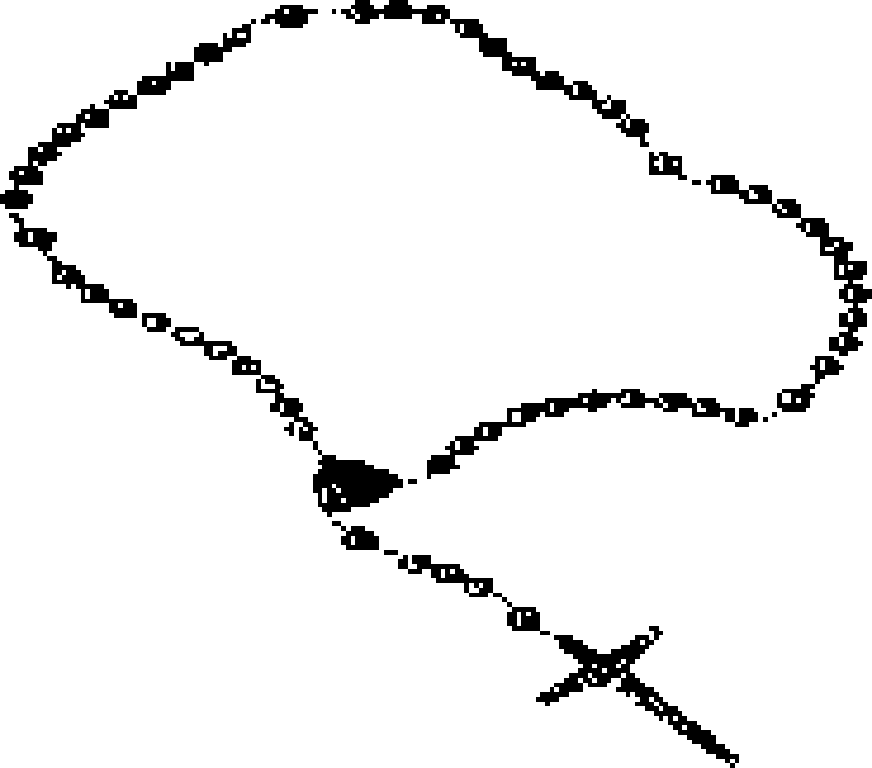
The Rosary today uses a string of beads divided into sections. It begins with the Crucifix on which we pray the Sign of the Cross and the Apostle’s Creed. A short section follows on which we pray 1 Our Father, 3 Hail Marys and the Glory Be. The Rosary connects in a large circle with 5 larger sections on which we meditate on a Mystery and pray 1 Our Father followed by 10 Hail Marys and 1 Glory Be. The Rosary ends with the Hail Holy Queen. Some communities have additional closing prayers that they use.
ORIGIN OF THE ROSARY - MYSTERIES
Many religious truths are beyond human understanding. They awe us. They help us to enter into relationship with God. They make faith more real to us. Yet, our humanness is incapable of fully understanding, defining, or explaining them. We call them mysteries.
The Mysteries of the Rosary focus on the main events in the life of Christ that have been proclaimed to the people from the beginning of the Church. These events had been passed on through the preaching of Sacred Scripture and through the faith experience of the community.
As John Paul II writes,” Against the background of the words Hail Mary, the principal events of the life of Jesus Christ pass before the eyes of the soul. They take shape in the complete series of the Joyful, Sorrowful and Glorious mysteries, and they put us in living communion with Jesus through- we might say- the heart of his Mother. At the same time our heart can embrace in the decades of the Rosary all the events that make up the lives of individuals, families, nations, the Church and all mankind…Thus the simple prayer of the Rosary marks the rhythm of human life.”
Each group of Mysteries of the Rosary consist of five meditations.
ORIGIN OF THE ROSARY- THE JOYFUL MYSTERIES
The Joyful Mysteries of the Rosary help us to recall and appreciate those times in the life of Mary and Jesus that would have been causes of joy for our Blessed Mother. The Joyful Mysteries are traditionally prayed on Mondays and Thursdays, the Sundays of Advent and the Sundays after Epiphany until Lent.
The first Joyful mystery is The Annunciation.
We reflect on that time when the Angel Gabriel appeared to Mary, announcing that she was to be the Mother of God. He greets her with the words, “Hail, favored one. The Lord is with you.” The first half of the Hail Mary developed from this scripture. The church celebrates this mystery on March 25th during her liturgy. Sacred Scripture proclaims this mystery in the Gospel of Luke, chapter one, verses 26-38.
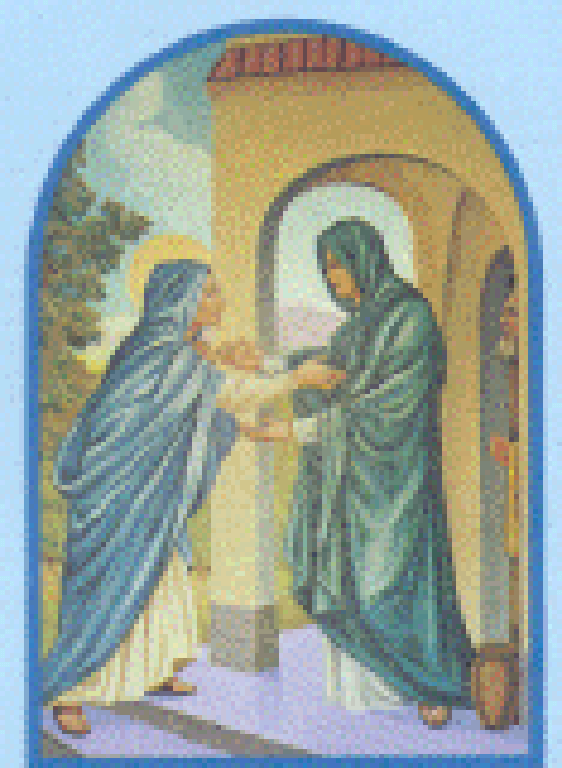
The second Joyful Mystery is The Visitation.
The third Joyful Mystery is The Nativity.
The Blessed Virgin Mary gives birth to the Redeemer of the World! Great joy must fill our hearts each time we ponder the great love our God has for us. God loves us so much that He became one of us to save us from sin! The Church celebrates this mystery on December 25. Sacred Scripture proclaims it in the Gospel of Luke, chapter 2, verses 1-20.
The fourth Joyful mystery is The Presentation.
In accordance with the law of Moses, Joseph and Mary presented the child to the Lord. Pondering this mystery helps us to see the great role that parents have in passing on the faith to their children. The Church celebrates this mystery on February 2. It can be found in Sacred Scriptures in the Gospel of Luke, chapter 2, verses 22-38.
The fifth Joyful Mystery is the Finding in the Temple.
While visiting Jerusalem for the Passover, Jesus becomes separated from Mary and Joseph. They find Him when they return to the temple. Jesus says, “Did you not know that I must be in my Father’s house?” The Church celebrates this mystery on the Feast of the Holy Family. Luke, chapter 2, verses 41-51 proclaims this mystery.
ORIGIN OF THE ROSARY- THE SORROWFUL MYSTERIES
The Sorrowful Mysteries of the Rosary help us to recall times in the life of Jesus that involved suffering and sorrow. These mysteries are traditionally meditated upon on Tuesdays and Fridays, and the Sundays during Lent.
The first Sorrowful Mystery is the Agony in the Garden.
After celebrating a special meal with his disciples Jesus went to the Mount of Olives to pray for the strength needed to endure His passion and death. As He prays, Jesus contemplates the sins of the world. This mystery is recorded in the Gospel of Luke, chapter 22, verses 39-46. The Church recalls this mystery on Holy Thursday.
The second Sorrowful Mystery is the Scourging.
The third Sorrowful Mystery is the Crowning with Thorns.
The fourth Sorrowful Mystery is the Carrying of the Cross.
After being sentenced to death, Jesus carries the heavy cross upon His shoulders. This mystery is found in the Gospel of John, chapter 19, verse 16-17. The Church celebrates this mystery on Sept. 14th.
The fifth Sorrowful Mystery is the Crucifixion.
Jesus is nailed to the cross and dies after three hours of agony. This mystery is found in the Gospel of John, chapter 19, verses 18-30. The Church celebrates this mystery on Good Friday.
ORIGIN OF THE ROSARY- THE GLORIOUS MYSTERIES
The Glorious Mysteries help us to recall the events of Jesus’ risen life that are recorded in Sacred Scriptures and the events in the risen life of Mary as has been preserved through the Church’s practices and teachings. These mysteries are traditionally meditated upon on Wednesdays and Saturdays, and the Sundays after Easter until Advent.
The first Glorious Mystery is the Resurrection.
Jesus rises gloriously and immortally, from the tomb, three days after His death. The Resurrection is recorded in the last chapter of all four Gospels and in each New Testament book that follows. We celebrate this mystery most gloriously on Easter, but also on every Sunday.
The second Glorious Mystery is The Ascension.
Jesus, after appearing in may various places, ascended into heaven forty days after His glorious Resurrection. The Gospels of Mark and Luke both end with an account of Jesus’ ascension into heaven. The Acts of the Apostles begins with Jesus’ ascension. The Church celebrates the ascension each year on the fortieth day after Easter. In the U.S. we celebrate the Ascension on the Seventh Sunday of Easter
The third Glorious Mystery is The Descent of the Holy Spirit.
Jesus promises to send His Spirit to His followers in the Gospel of Luke, chapter 24; verse 49. The fulfillment of the promise is recorded in the Acts of the Apostles, chapter 2. It is the indwelling of the Spirit that strengthened the Apostles to begin the missionary activity that gave birth to the Church as the universal body of Christ that it is today. The Church celebrates this mystery on Pentecost, 50 days after Easter.
The glorious events of Mary’s life are NOT recorded in the Gospels or any book of Sacred Scripture. The Gospels concern the life and teachings of Jesus- not his mother. The Church believes in these mysteries through faith built upon the tradition of her members and their faith practices throughout history.
The fourth Glorious Mystery is The Assumption of the Blessed Virgin Mary.
Belief that the Blessed Virgin Mary was assumed into heaven and united with her divine Son has existed in the Church from the earliest of times. We celebrate this mystery on Aug.15
The fifth Glorious Mystery is The Coronation of the Blessed Virgin Mary.
We believe, based on the lived faith practices of the Church, that Mary is gloriously crowned Queen of Heaven and Earth. We celebrate this mystery on August 22.